You can eat Korean BBQ alone. At a regular BBQ restaurant, expect to order at least two servings (2인분). At a solo BBQ restaurant with personal grills, you can order a single portion or small cuts. Check the gram weight on the menu before you commit — one “serving” is not a fixed size.
The two-serving minimum is the main thing that stops solo travellers, and it catches people off guard because it is rarely written in English. Here is why it exists, how much meat you are really ordering, and three ways to get grilled meat on your own.
The short answer
- Regular BBQ restaurant → usually two servings minimum
- It is a house rule, not a law. Ask at the door before you sit down; many places accept one diner who orders two servings, but some may turn solo diners away at peak times.
- How much is a serving → read the grams
- A serving is not a fixed weight: one restaurant may list 150 g, another 200 g, so two servings mean 300 g or 400 g. Meat menus should also show a price per 100 g — compare that figure, and check the restaurant’s minimum order.
- Solo BBQ restaurant → one portion is fine
- These have single seats, a small grill at each seat and often kiosk ordering. Search specifically for a place with a one-person menu before you go.
- Lunch → look for a set
- A lunch special may include meat, rice and soup at a per-person price. Check that it accepts an order for one: some still require two diners.
Why the two-serving minimum exists
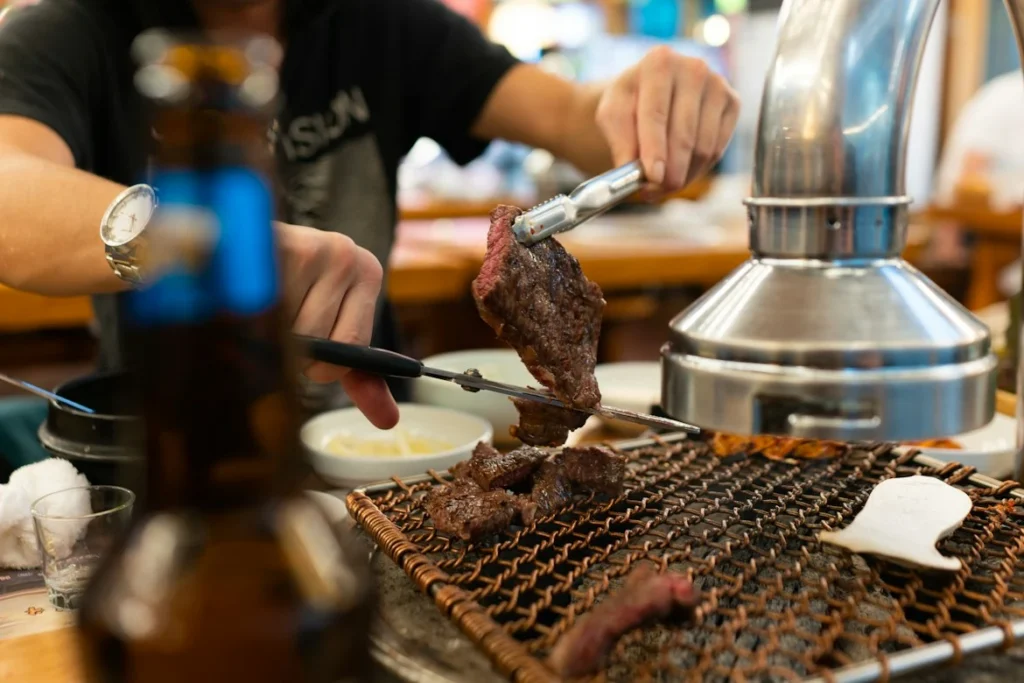
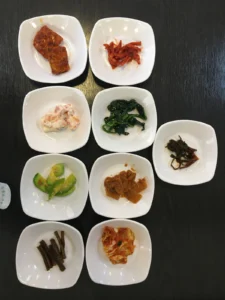
At a Korean BBQ restaurant, each table has its own grill, and the restaurant sets up charcoal or gas, a ventilation hood and a spread of side dishes (반찬, ban-chan) for every table it seats. One serving of meat often does not cover that, especially at dinner, when a table for one could have seated two or four. So many BBQ places set a 2인분 이상 (ee-een-boon ee-sahng, two servings or more) rule. You may see it on the wall or menu; often you only find out when you order.
This is not aimed at foreigners, and it is not a law. It is the same rule Korean solo diners face. Our first Korean restaurant visit guide explains other common table rules, such as ordering one dish per person.
How much meat is one serving?
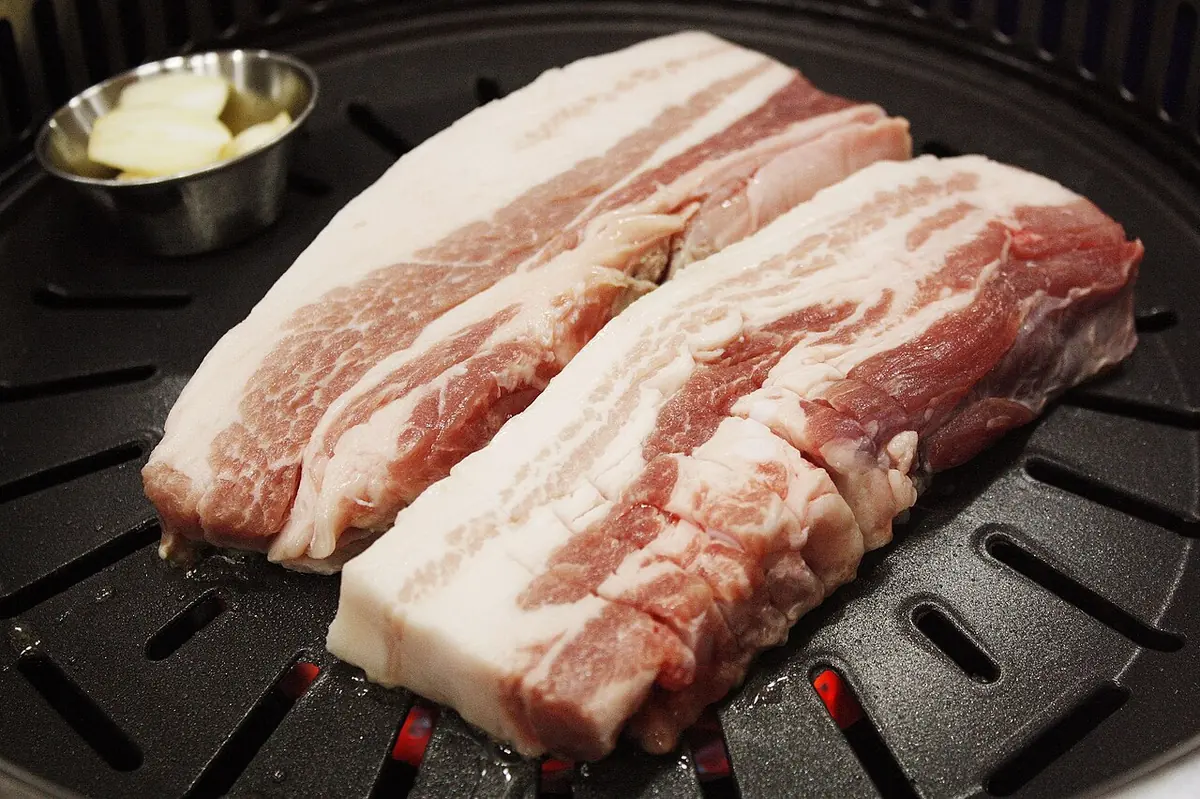
There is no national size for a serving (1인분, ee-reen-boon). Korean food-hygiene rules require restaurant price lists to show meat such as bulgogi and galbi per 100 g. If a per-serving price is also listed, the serving’s weight must appear alongside it — for example “100 g ₩○○ (1 serving 150 g ₩○○).” The separate 150 m² threshold concerns outdoor price displays, not whether meat needs a 100 g price.
Read the weight beside the price, not just “one serving.” A 150 g serving and a 200 g serving are different quantities, even if the menu calls both 1인분 (ee-reen-boon, one serving). With a two-serving minimum, the difference becomes 100 g of meat.
What two servings actually mean
- 150 g per serving → 300 g total.
- 200 g per serving → 400 g total.
To compare value, use the price per 100 g on the menu. If you only see a serving price and weight, divide the price by the grams and multiply by 100. Compare the same meat and cut; a lower price alone does not tell you the quality.
The minimum order, serving weight and whether rice or soup is included vary by restaurant and menu item. Check all three before you order. If you are eating alone, the total weight matters more than the word “serving.” If you have leftovers, ask whether the restaurant can pack them.
What if the meat has too much fat?
Pork belly naturally has layers of fat, but the balance of lean meat and fat varies by cut and restaurant. If the plate is mostly fat or is clearly fattier than you expected, tell the staff before you start grilling and ask for a replacement. Point out the pieces you are concerned about; do not quietly cook and eat a plate you are unhappy with. Raise the issue with staff before any of the meat goes onto the grill.
Three ways to eat BBQ alone
1. Order two servings at a regular restaurant
The simplest option, and the one with the widest choice of restaurants. Ask at the door whether one person is okay if you order two servings. Going outside the dinner rush makes a yes more likely. Many places will grill or cut the meat for you; if not, the staff can show you when to turn it.
2. Go to a solo BBQ restaurant
Restaurants built for one diner are spreading in Seoul. A typical layout is a row of single seats along the wall, thin dividers, and a small grill at each seat, with ordering by kiosk or tablet. A Korean news report in August 2025 described one Seoul chain whose branches are usually full at lunch, with customers from their 20s to their 50s. Portions can be small: a 2024 Korean review of one Myeong-dong solo BBQ spot described a set of three 50 g cuts with rice and soup for ₩13,300.
To find one, search Naver Map or Kakao Map for 1인 고기 (ee-een goh-gee) or 혼밥 고기 (hon-bahp kkoh-gee) (“solo meal, meat”) near where you are.
3. Eat BBQ at lunch
Some BBQ restaurants run a 점심 특선 (juhm-shim teuk-ssuhn, lunch special) on weekdays: a set priced per person, often a meat dish with rice, soup and side dishes. Depending on the place, it is grilled at your table or arrives cooked. A per-person price does not guarantee that one person can order: look for 2인 이상 (ee-een ee-sang, “two or more diners”). Ask whether one serving is possible before sitting down; the phrase below helps.
One-person menus are becoming more common, but the available figure covers restaurants of all kinds, not BBQ alone. According to NICE ZiniData, cited by the Korea Economic Daily, the share of Korean restaurants selling one-person menus rose from about 9.7% in March 2024 to about 10.4% in March 2025. That is a modest increase and not evidence that every neighbourhood has a solo BBQ spot. Check the map and the menu before making the trip.
Useful Korean phrases
Pronunciations are approximate.
Small things that help
- Sit where they put you. Solo diners are often seated at a smaller table or the counter. It is not a snub; it keeps larger tables free.
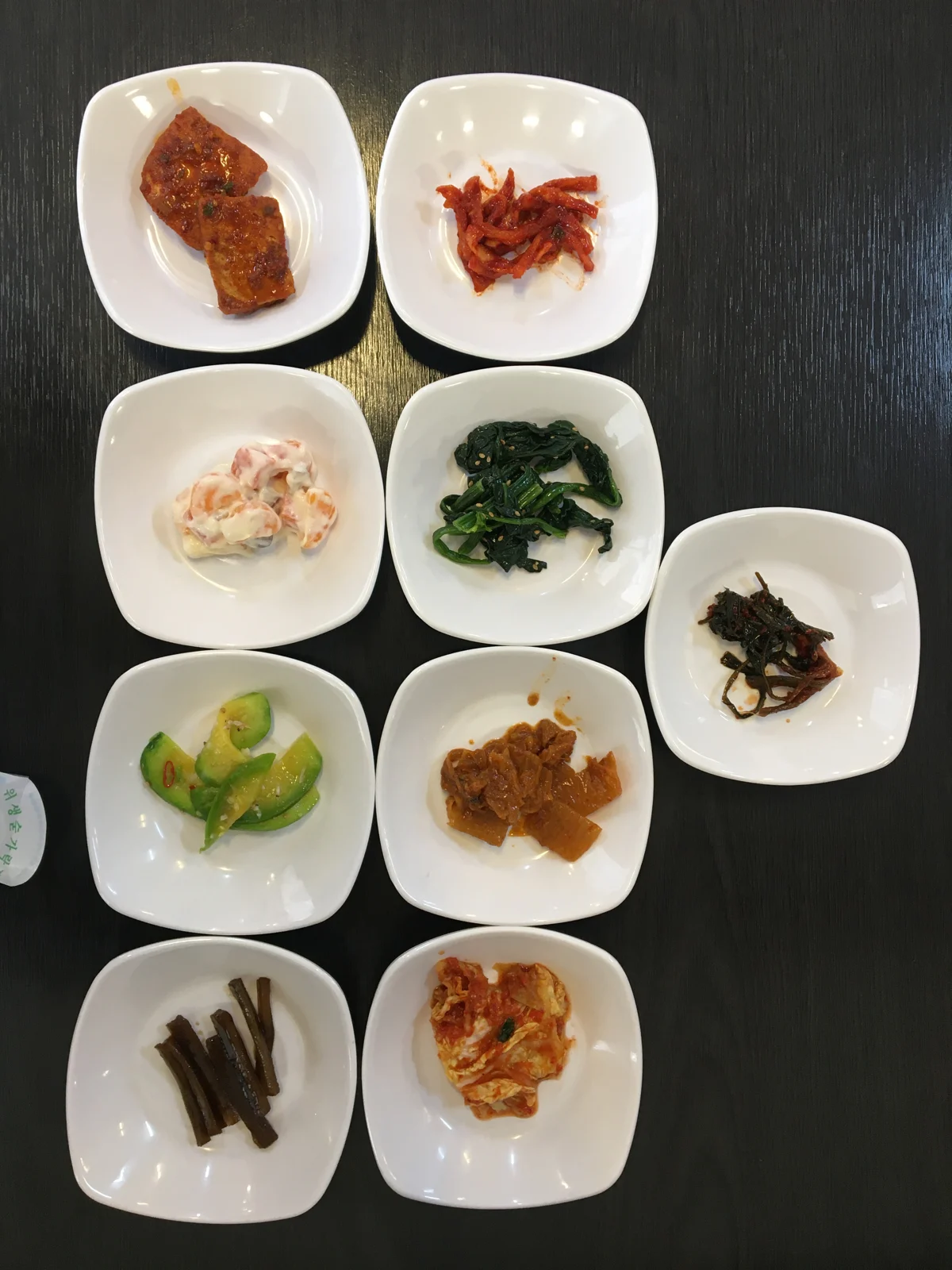
- Ask for a refill of side dishes. Banchan are usually refillable; some restaurants have a self-service bar.
- A fresh grill plate is normal. If staff swap your grill plate mid-meal, that is regular service, not a hint to leave.
- Paying: you usually pay at the counter on the way out. Our cash vs card guide covers what works with foreign cards.
Sources and update date
Updated September 30, 2026. Restaurant rules, prices and portions vary by place; the grams on the menu are the best guide.
- Dobong Public Health Center: food-business obligations, including meat prices per 100 g (Korean).
- Seoul Metropolitan Government: outdoor restaurant price displays and the 150 m² threshold (Korean).
- Easy Law (Korean government legal information): restaurant price-display rules, including meat per 100 g (Korean).
- The Korea Economic Daily: solo diners fill one-person BBQ restaurants, August 2025 (Korean).
- 1conomy News: review of a Myeong-dong solo BBQ restaurant, October 11, 2024 (Korean).










Leave a Reply