For non-prescription medicine in Korea, start at a pharmacy. For a diagnosis or prescription, visit a clinic. In a medical emergency, call 119. Convenience stores sell only a small selection of designated medicines, and only registered stores carry them.
This guide covers what to show a pharmacist, how to find a pharmacy after hours and how the clinic-to-pharmacy process works for visitors. It also separates the cost of an ambulance from the cost of treatment.
The short answer
- Bring your medicine or a photo of its label
- The active ingredient and strength help the pharmacist more than a brand name.
- At night or on a holiday, search first, then call
- Use E-Gen’s pharmacy finder and phone the pharmacy before you go.
- Medical emergency → 119
- Call 119, ask for interpretation and give your exact location.
| Where | Use it for | Keep in mind |
|---|---|---|
| Pharmacy | Over-the-counter medicine, advice from a pharmacist and filling a Korean prescription. | A pharmacist cannot diagnose you or write a prescription. Hours vary by branch. |
| Registered convenience store | A short list of designated pain and fever, cold, digestive and patch products. | Not every 24-hour store is registered. One pack of a product per sale; no sales to children under 12. |
| Clinic | A medical assessment and a prescription for a non-emergency problem. | Ask about appointments and English support before you go. |
| 119 | Medical emergencies, fire and rescue. | Public 119 ambulance transport is free; hospital treatment is billed separately. |
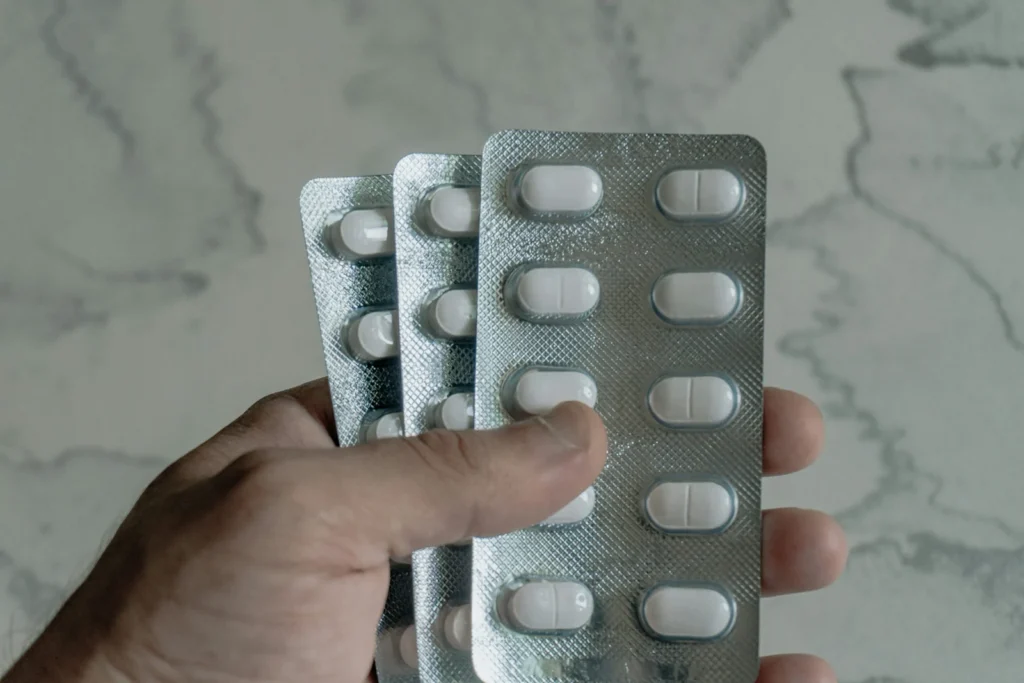
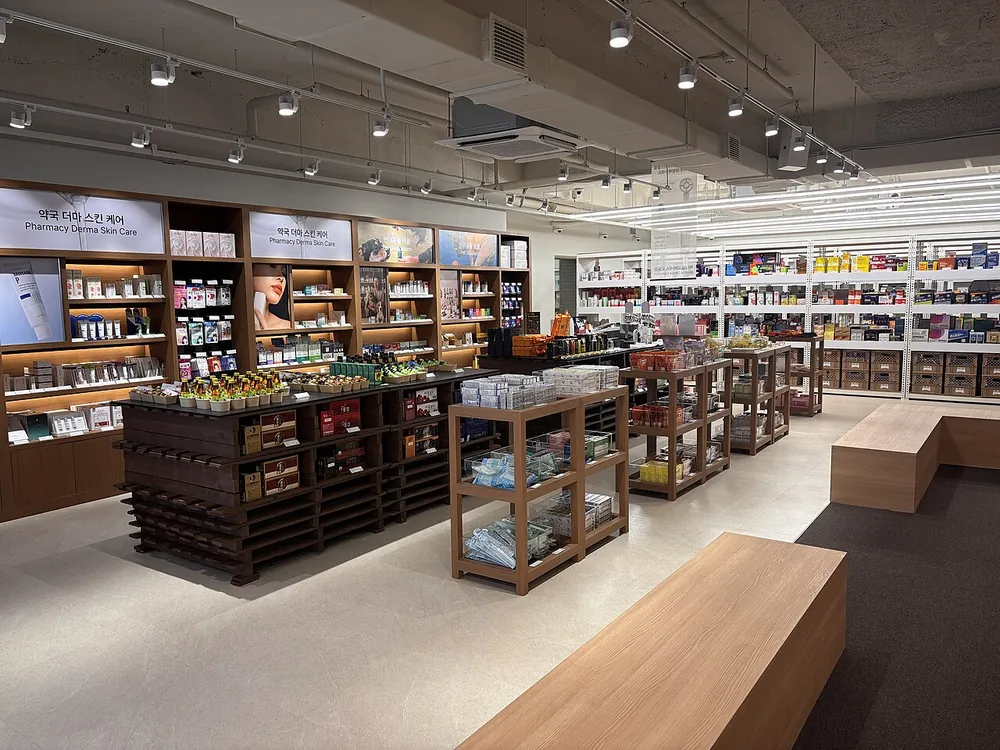
Buying medicine at a pharmacy in Korea
You do not need a doctor’s prescription to buy an over-the-counter medicine. Look for a 약국 (yak-kkook) sign and tell the pharmacist what you need help with. A few prepared details make the conversation much easier.
What to show the pharmacist
- Your symptoms: what is bothering you and when it started.
- Medicine you already use: the package, or a clear photo of the label showing the active ingredient and strength. Say when you last took it.
- Allergies: especially any allergy to a medicine.
- Who it is for: mention pregnancy or a relevant medical condition. If the medicine is for a child, say so and give the child’s age.
Why a label photo works better than a brand name: the same medicine is often sold under different names in different countries, and one brand can come in several versions. The ingredient name and strength let the pharmacist compare it with what is sold in Korea and suggest a local alternative when one is suitable.
Ask the pharmacist to confirm
- How much to take and how often.
- Whether to take it before or after meals.
- Whether you can take it with the medicines you already use.
A translation app can help you ask. Have the pharmacist confirm the instructions rather than guessing from a translated label. The phrases at the end of this guide cover the key questions.
Watch for doubled ingredients. A combination cold medicine can contain the same pain and fever ingredient, such as acetaminophen (also called paracetamol), as a separate painkiller. Cold medicines and allergy medicines can also share antihistamine ingredients. Korea’s Ministry of Food and Drug Safety advises checking for these overlaps with a doctor or pharmacist. Show the pharmacist everything you plan to take together, including medicine from home or a convenience store.
Some allergy medicines are available without a prescription. For example, Yuhan lists cetirizine tablets sold as Zyrtec as an over-the-counter medicine in Korea. Prescription requirements depend on the exact product and ingredient, so show the pharmacist the medicine you use rather than assuming all allergy treatments need a doctor’s visit.
Packaging depends on the product and prescription. You may receive a retail box, blister pack, bottle or individually packed doses. There is no universal “three-day pack” rule for visitors.
Can you buy medicine at a convenience store?
Yes, but only at stores registered to sell designated over-the-counter medicines. Being open 24 hours does not, by itself, mean a branch sells medicine. Registered stores must post their registration and usage cautions, so look for that notice or a medicine shelf, or ask at the counter. Our Korean convenience-store guide covers the rest of the shopping process.
The Ministry of Health and Welfare’s current list covers four groups: pain and fever relievers, cold medicines, digestive aids and pain-relief patches. It names specific approved products and pack sizes. It is not permission to sell every medicine in those groups, and it does not include prescription medicine. For example, a listed digestive aid does not mean the store carries all antacids or stomach medicines.
Stores also have sales limits: one package unit of a product per sale, and no sales to children under 12. Some children’s products are on the list, but a child under 12 cannot buy them. Stock varies by branch. If you need advice, a product outside this short list or a prescription medicine, go to a pharmacy or clinic instead.
Seeing a doctor and filling a prescription
For a non-emergency problem that needs a medical assessment, contact a local clinic first. A large hospital’s international clinic may be useful when you need language support or coordinated specialist care, but check its appointment process before turning up. An English “hospital” sign alone does not tell you whether a facility has an emergency department.
- Before the visit: ask whether the clinic can see you, whether you need an appointment, what identification to bring and whether English assistance is available. Have your passport, insurance details and a list of medicines ready.
- At the consultation: explain your symptoms and show any existing prescription or medical records. An overseas prescription helps the doctor understand your treatment, but a Korean refill is not guaranteed. Plan for a local consultation if you need to replace a prescription medicine from home.
- After the consultation: collect any prescription the doctor issues. Korea generally separates prescribing by doctors from dispensing by pharmacists, so outpatient prescriptions are commonly filled at a pharmacy outside the clinic or hospital. Seoul National University Hospital, for example, notes that outpatient prescription medicines are usually not included in its outpatient bill.
- At the pharmacy: hand over the prescription, pay for the medicines and confirm the instructions. Keep the pharmacy receipt as well as the clinic receipt: the medicine bill is often separate.
Ask the clinic which nearby pharmacy can fill the prescription before you leave, especially near closing time. Allow time for both stops when planning the rest of your day.
Finding a pharmacy at night, on Sunday or on a holiday
Opening hours are specific to each pharmacy. Some open late or on holidays, but “duty pharmacy” does not mean every district always has a 24-hour option. Both finders below are mainly in Korean; browser translation or help from your accommodation’s staff can make them easier to use.
- E-Gen pharmacy finder: open E-Gen’s pharmacy finder, run by the National Emergency Medical Center. Select the province, district and neighborhood where you are staying. The map view shows whether each nearby pharmacy is listed as open now; the general search lets you pick a day and time to plan for a Sunday or holiday. Results include each pharmacy’s phone number and address, and the page offers a downloadable list of pharmacies open after 10 p.m.
- Pharm114: the Korean Pharmaceutical Association’s pharmacy finder lets you search by pharmacy name, road name or neighborhood name, or by province and district. It also has a button for the list of public late-night pharmacies. Without location access, its map starts from the association’s own office, so search with the road or neighborhood name from your accommodation’s Korean address.
- Call before leaving: E-Gen notes that its hours come from the Korean Pharmaceutical Association and can change. Confirm that the pharmacy is open now and, if you need a particular medicine, ask whether it has it.
Some local governments support public late-night pharmacies that stay open late into the night. Hours and locations vary, so check the lists above and call rather than assuming a fixed schedule.
If you need a doctor after hours, use E-Gen’s separate hospital finder rather than expecting a pharmacy to provide a diagnosis or prescription. For an emergency, call 119 instead of spending time comparing listings.
Calling 119: emergency help and ambulance costs
119 is Korea’s fire, rescue and medical emergency number. Call 119
- Ask for interpretation: say “English, please.” Interpretation can be connected to the call, but do not expect every call to be answered in English straight away.
- Give your location: the address, building name, floor and room number, or a nearby landmark. The Korean address from your booking helps.
- Explain what happened: describe the main symptoms and when they started.
- Stay on the line: follow the dispatcher’s instructions.
If your own phone cannot place the call, ask someone nearby or hotel staff to call 119 immediately.
Public 119 emergency ambulance transport is free. That does not make treatment free: the hospital bills separately. Private or hospital-operated ambulances can charge fees based on time and distance, so “all ambulances are free” would be misleading. In an emergency, contact 119; do not delay urgent care to sort out insurance paperwork.
119 for emergencies. 1330 and 1339 are different services. The 1330 Korea Travel Helpline offers travel information and interpretation help, for example with accommodation, transport, restaurants and shopping. Use its phone or chat service for non-emergency travel communication. For an emergency, call 119 directly. 1339 is the Korea Disease Control and Prevention Agency’s line for infectious-disease information and reporting. It is not an ambulance number or a general medical helpline.
Paying for treatment and using travel insurance
If you are visiting without Korean National Health Insurance coverage, be prepared to pay the clinic and pharmacy yourself unless direct billing has been confirmed. Having travel insurance does not automatically reduce the amount charged at the counter.
Some providers can bill your insurer directly. Seoul National University Hospital, for example, lists arrangements with overseas insurers and requires payment authorization in relevant cases. For a planned visit, ask your insurer and the provider early whether they can arrange this, whether payment authorization is needed and what you will still owe.
Otherwise, keep these documents:
- The clinic or hospital receipt and an itemized statement of charges. Ask for the statement before you leave.
- The separate pharmacy receipt.
- The prescription. Take a photo of it before you hand it over at the pharmacy.
- Your card or payment records.
Ask your insurer which documents it requires and whether English documents are needed before leaving the provider. Reimbursement depends on your policy and claim; paying upfront does not guarantee the full bill will be repaid.
Korean phrases you can show at the counter
The middle line gives an approximate pronunciation for English speakers. You can also show the Korean sentence on your phone.
Sources and update date
Updated September 29, 2026; sources below were checked on September 28–29, 2026. This guide explains how to access care and is not medical advice or a medicine recommendation.
- Ministry of Health and Welfare: prescribing and dispensing; designated medicines sold outside pharmacies; itemized statements of charges, January 2018 (Korean).
- Ministry of Food and Drug Safety: safe use of cold medicines, including ingredient overlaps, January 2016 (Korean).
- U.S. National Library of Medicine: MedlinePlus — acetaminophen (also lists the name paracetamol).
- Yuhan: Zyrtec tablets, listed as an over-the-counter product (Korean; classification example, not a product recommendation).
- National Emergency Medical Center: E-Gen pharmacy finder; E-Gen hospital finder (Korean).
- Korean Pharmaceutical Association: Pharm114 pharmacy finder (Korean).
- Korea Tourism Organization: Pharmacy Guide in Korea; 1330 Korea Travel Helpline.
- Government24: 1330 tourist information and interpretation service (Korean).
- Korea Disease Control and Prevention Agency: 1339 call center.
- Seoul Metropolitan Government: Living in Seoul guide, 2022 (119 emergency services).
- New Zealand Embassy in Seoul: emergency numbers in Korea (119 interpretation).
- Korea’s Easy Law government service: public and private ambulance transport (Korean).
- Seoul National University Hospital: billing, international insurance and outpatient medicines.



Leave a Reply