Quick answer
Prepare the entry documents that apply to your passport and trip, then follow the airport signs through any required quarantine checks, immigration, baggage claim and customs. If you forgot the e-Arrival Card, you can still submit it after landing, before immigration. Once landside, arrange your connection and choose the train, bus or taxi that fits your destination.
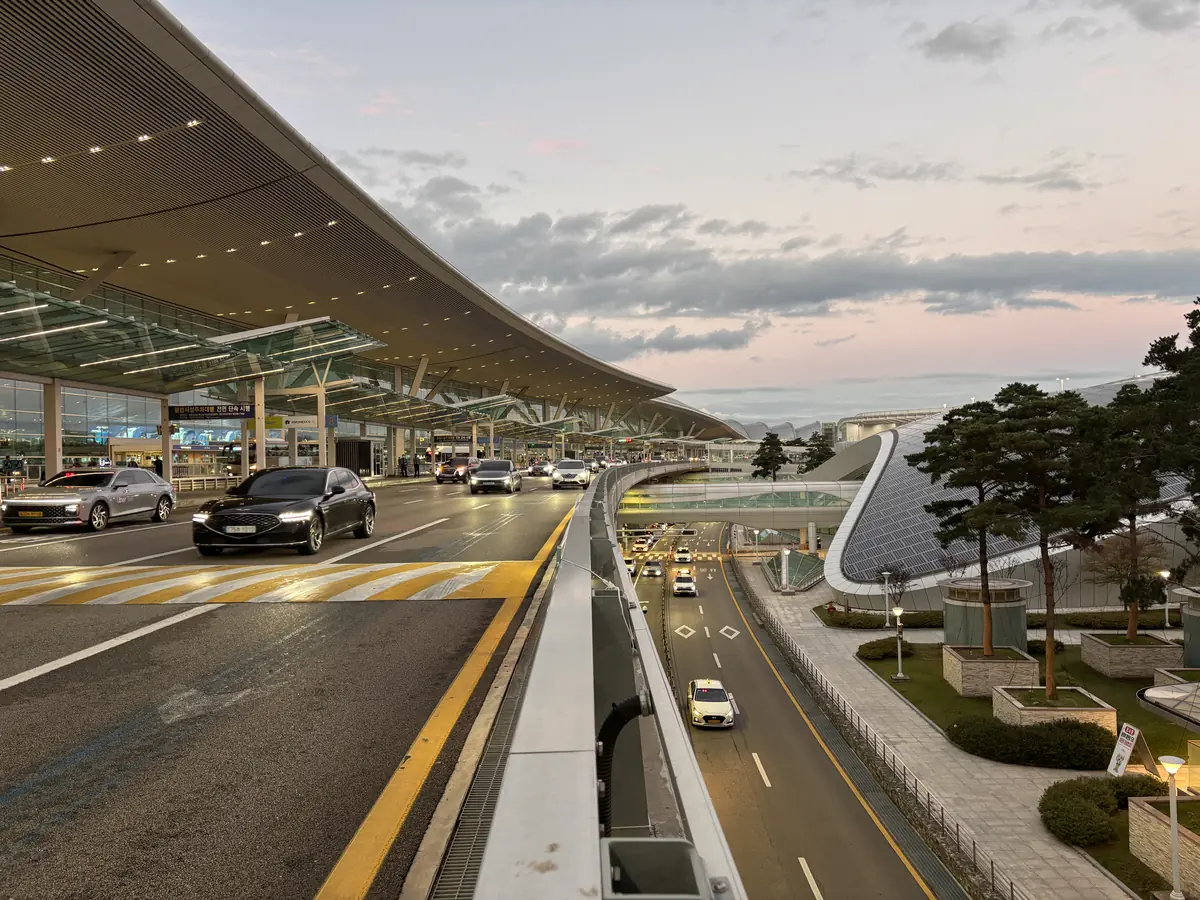
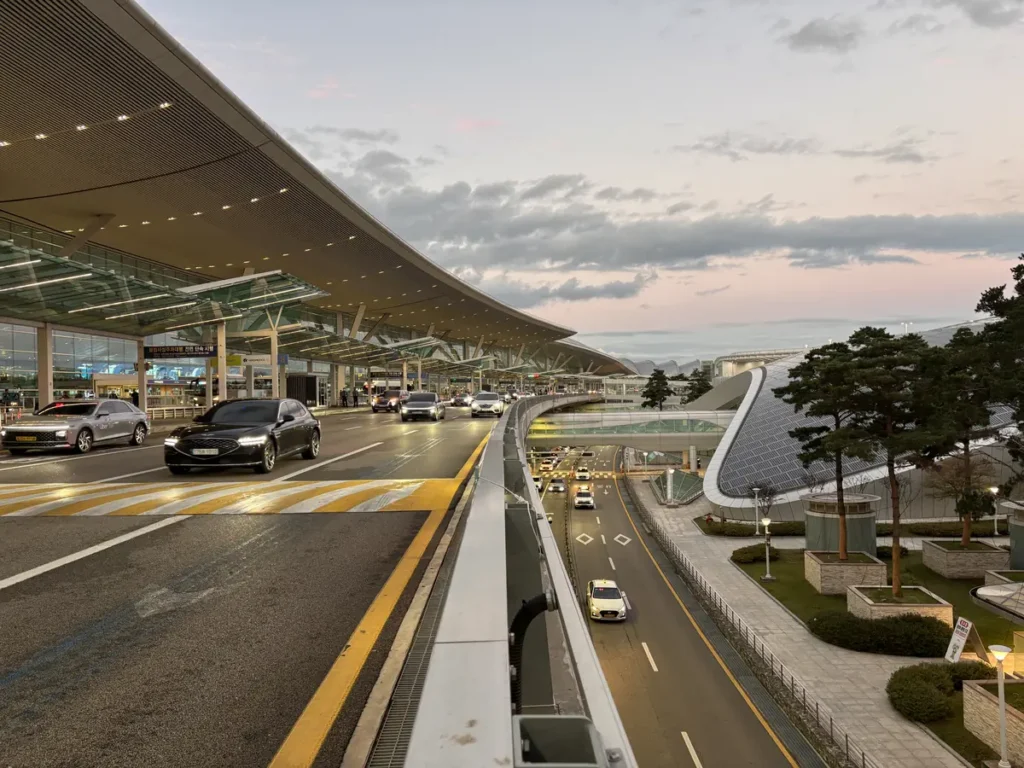
After a long flight, a clear sequence is more useful than a long list of airport tips. This guide covers entering Korea at Incheon, reaching the arrivals hall, and choosing your onward transport. Staying airside for a connecting flight is a different process.
1. Check your documents before flying
| Document / check | What it does |
|---|---|
| Visa or visa-free eligibility | Determines whether your nationality, purpose and length of stay qualify for entry. Check your own circumstances. |
| K-ETA | Travel authorization for eligible visa-free travelers. The current temporary exemption covers designated nationalities through 31 December 2026; it is not an exemption for everyone. Our K-ETA guide lists the 22 exempt passports and what to file instead. |
| e-Arrival Card | An entry declaration for travelers who must submit one. It is separate from a visa and K-ETA. |
| Health declaration | Depends on current quarantine requirements and your travel history or symptoms. Check the airport’s current quarantine guidance. |
Flying in December? Our December packing guide covers the plug adapter, the e-Arrival Card and what to buy after you land.
Use the official K-ETA notice and e-Arrival Card eligibility navigator linked below. A valid Korean residence card, a valid K-ETA and entry with a visa can change which declaration applies; nationality alone is not the whole test. The e-Arrival Card is free. Do not mistake a paid third-party application service for the government website.
The official FAQ describes a three-day submission window including your arrival day in Korean time. For example, a 31 January arrival permits submission on 29, 30 or 31 January. Preparing it before departure is convenient, but it is not a rule that submission becomes impossible once you land.
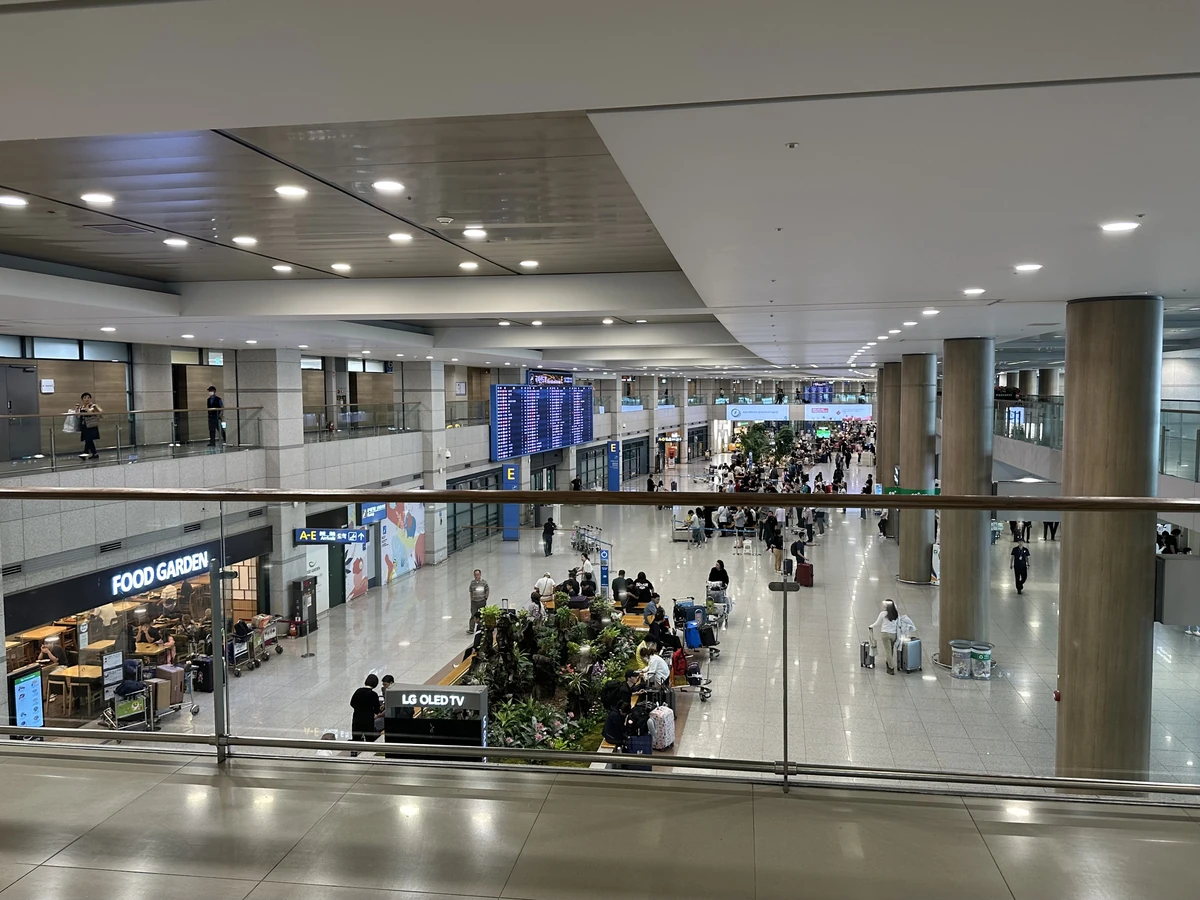
2. Incheon Airport arrivals: the steps in order
| Stage | Your next action |
|---|---|
| Arrival and quarantine, if required | Follow arrival signs and any current health-screening instructions. Some concourse arrivals involve a shuttle train. |
| Immigration | Use the lane appropriate to your passport and eligibility. Keep your passport and accommodation details ready. |
| Baggage reclaim | Check the carousel against your flight number, not just the departure city. |
| Customs | Declare goods when required, or ask a customs officer if you are unsure. |
| Arrivals hall | Meet your party and arrange communication, payment and onward transport. |
Automated-gate eligibility is separate from simply visiting Korea before. Follow the current signs or ask staff; do not assume a first visit lets everyone enroll in an express-entry program. Queues vary, so avoid a tight onward booking based on a claimed average immigration time.
3. Check what you need to declare
Korea Customs lists a general personal duty-free allowance of US$800, with separate allowances and restrictions for some goods. Being below US$800 does not automatically make every food, medicine, animal or plant product acceptable. Check the official allowance and restricted-item guidance before packing.
Keep receipts for purchases that may need declaration. If you are uncertain at the airport, ask a customs officer before leaving the customs area. Do not treat the green channel as a shortcut around a question about your luggage.
4. Set up only what you need now
- Confirm your terminal and the full Korean address of your accommodation. Save the address on your phone so you can show it without repeatedly searching.
- Check whether your existing mobile plan or eSIM already provides data. If you need a new service, confirm device compatibility and activation instructions before paying.
- If using regular public transport, get a suitable transit card or ticket and confirm how it can be topped up. Card purchase and travel balance are separate. Our T-money card guide covers the airport stores, top-ups and refunds.
- Keep a backup payment method. Store stock, counter hours and foreign-card acceptance vary.
- Korean sockets take round two-pin Type C/F plugs at 220V; if your plugs are flat or three-pin, pack an adapter. Our plug and adapter guide says who needs one and what to check on a charger.
Our convenience-store guide explains what to check when buying a transit card or using an ATM.
5. Choose your route into Seoul
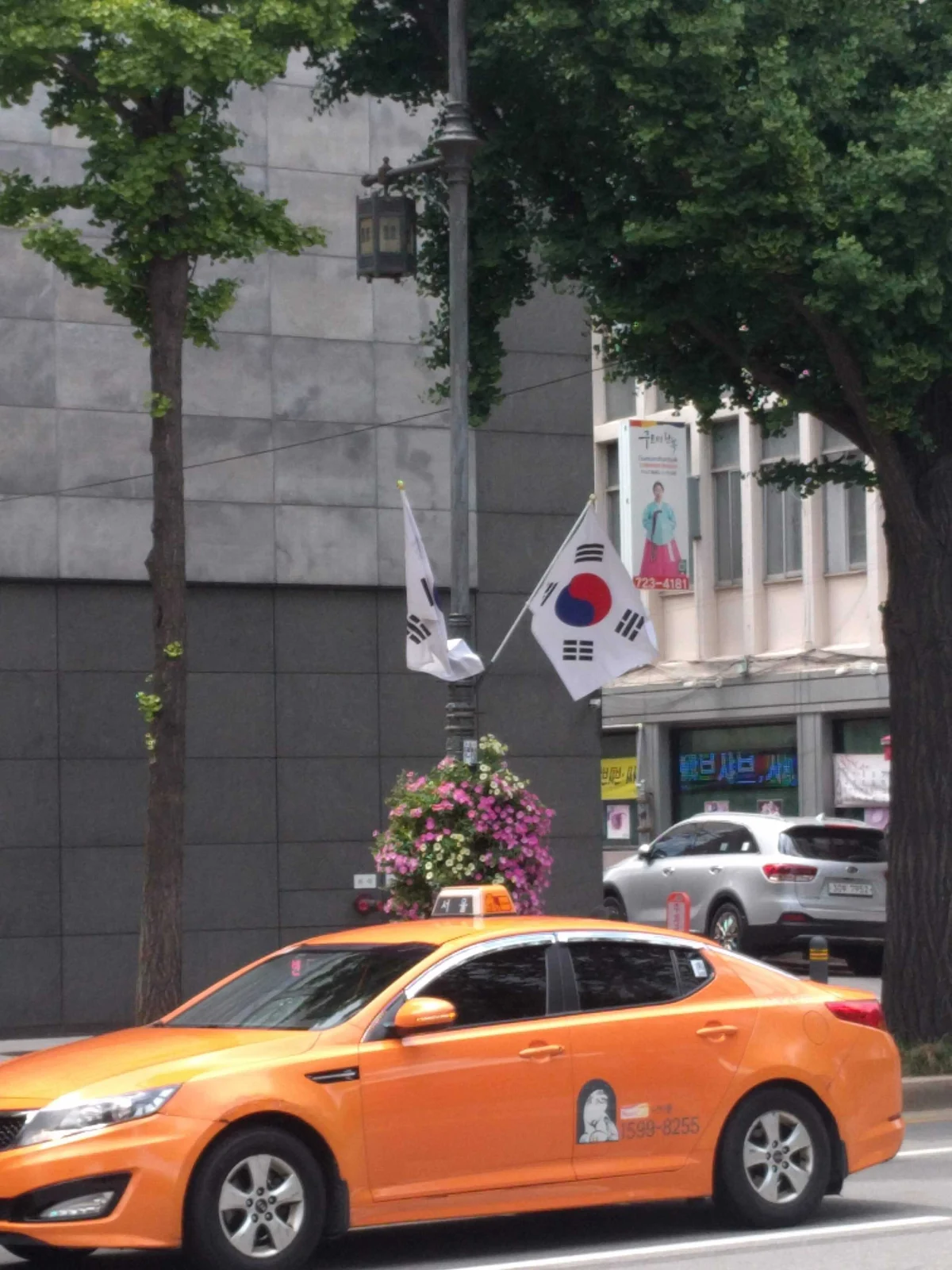
For Seoul Station, take AREX. For Hongdae, choose the All-stop train. Staying in Myeongdong with a large suitcase? Bus 6015 is worth the extra fare if its stop is close to your hotel: you can skip the subway transfer. A taxi makes more sense when you want to go straight to the door, especially after the last trains.
Here is the useful comparison for one adult travelling one way. Train times start when the train leaves; allow extra time for baggage, ticketing and the trip from the station to your hotel.
AREX All-stop · the budget choice
₩4,750 from T1 / ₩5,350 from T2 to Seoul Station.
About 59 / 66 minutes respectively, depending on the departure.
Use a funded Tmoney card or an All-stop ticket. This is the train for Hongik University (Hongdae) and Gongdeok too; the Express skips both. The prices above are the adult transport-card fares to Seoul Station, not the total fare to every hotel.
AREX Express · a reserved seat
₩13,000 from either terminal to Seoul Station.
43 minutes from T1 / 51 minutes from T2.
Buy an Express ticket with an assigned seat. Tmoney alone does not cover this train. It is a straightforward choice for Seoul Station, but for Myeongdong you still need the Line 4 connection below.
Bus 6015 · fewer transfers for Myeongdong
₩17,000 per adult. Stops include Lotte Hotel / IBIS Myeongdong and Myeongdong Station near L7 and Sejong Hotel.
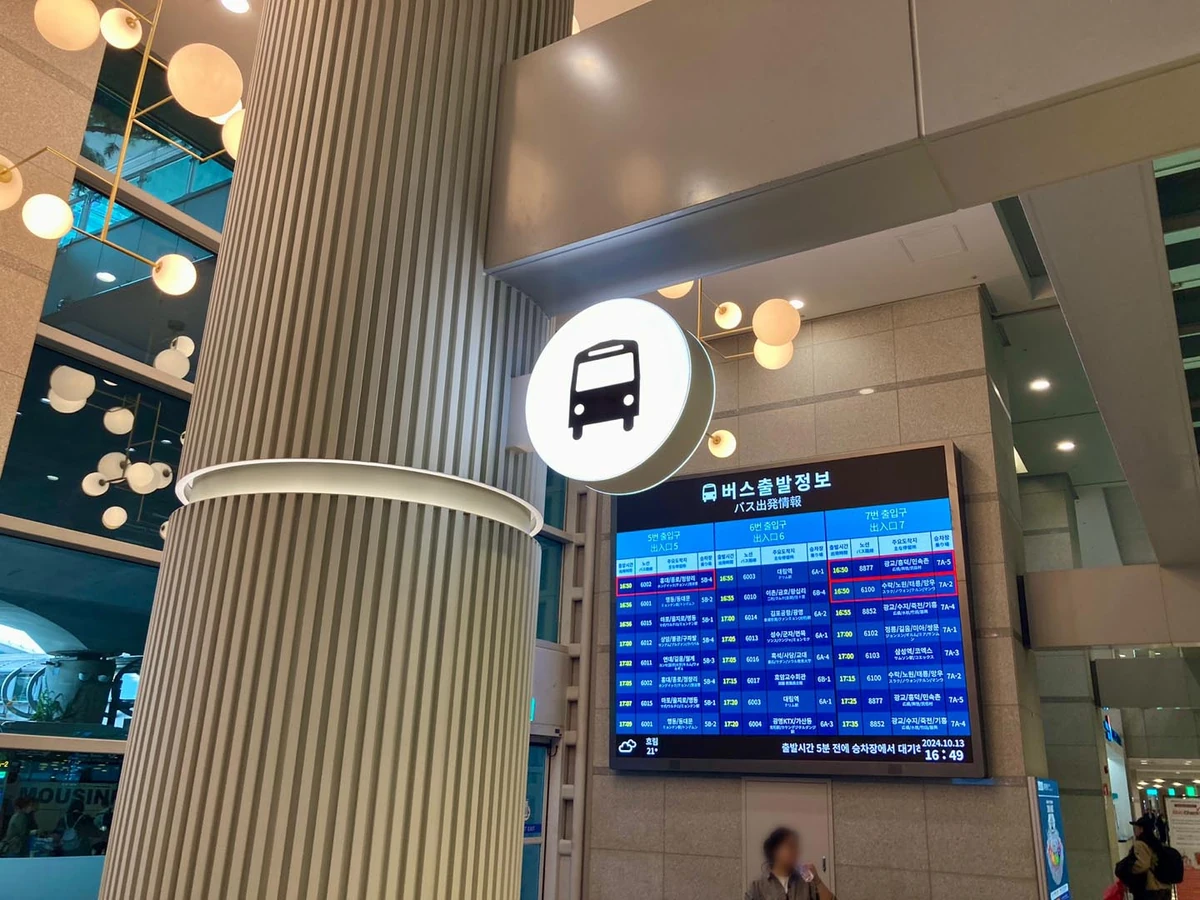
Board at T1 1F, stop 5B-2, or T2 B1, platform 28. Buy a ticket at T2. The operator currently allows cash, card or a ticket at T1 on a first-come basis. Road traffic and the stops before yours affect arrival time; ask the ticket desk for the next departure and an estimate to your particular stop.
Taxi · straight to your hotel
As a fixed-price example, Seoul’s International Taxi standard (sedan) zone fare to Jung-gu, including Myeongdong, is ₩85,000 per vehicle. This is a named service, not the price of every taxi in the queue.
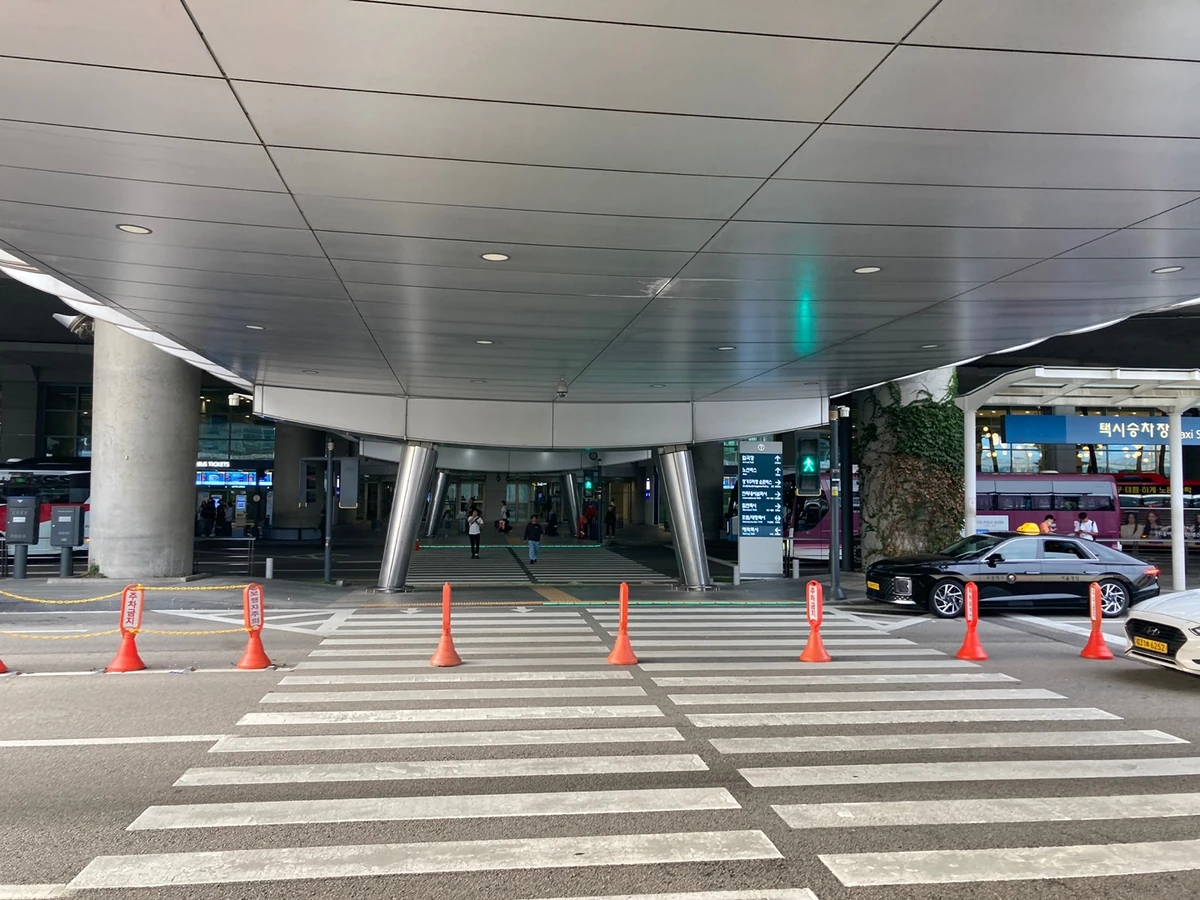
Its airport–Seoul zone fare includes tolls and has no late-night surcharge; online reservations require at least 24 hours’ notice. An ordinary Seoul taxi uses the meter, with tolls and applicable night charges added. If you have just landed without a booking, use the marked taxi rank and show your hotel’s Korean address. Journey time depends on traffic and the exact hotel.
Transport fares and departures checked 1 November 2026. AREX route search · 6015 stops and timetable · International Taxi
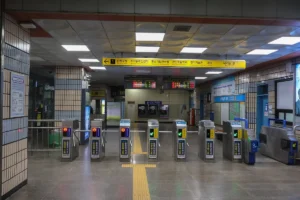
For either train, follow Airport Railroad / Transportation Center signs to B1. Choose the Express or All-stop gates before buying your ticket. If your flight lands late, use the time you expect to reach the platform—not your landing time—to decide whether the train will work.
Landing late? Save these departures
- Last AREX Express to Seoul Station: T1 22:48, T2 22:40.
- Last All-stop that reaches Seoul Station: T1 23:38, T2 23:32. Check the train’s destination as well as its departure time.
- Last 6015 toward Myeongdong: T1 23:19, T2 22:59 on the operator’s current weekday and weekend timetables.
All times are Korean local time. Reaching Seoul Station on the final train does not guarantee a Line 4 connection: check the onward train for your travel date, or plan a taxi from Seoul Station.
After the trains, N6701 is a useful central-Seoul fallback. It costs ₩18,000 per adult and stops at Mapo, Seoul Station, Euljiro 1-ga (listed by the airport as Euljiro Entrance) and Dongdaemun Design Plaza. Euljiro 1-ga can suit a hotel on the north side of Myeongdong; it is not Myeongdong Station.
- From T1: 23:50, 00:40, 01:40, 03:45, 04:40.
- From T2: 23:30, 00:20, 01:20, 03:25, 04:20.
The airport lists about 60 minutes from T1 to Seoul Station, or 80 minutes from T2, before your last leg to the hotel. Buy a ticket at the airport booth or machine, or through Tmoney GO. Check the live departure board before heading outside; if the next bus leaves a long wait or an awkward final walk, the taxi rank is the simpler option.
Going to Myeongdong? Here is the train route
Take AREX to Seoul Station, then Line 4 for two stops to Myeongdong. Choose a Seoul Station-bound departure from either airport terminal.
- At the airport: follow the Airport Railroad signs and choose AREX Express or All-stop to Seoul Station.
- At Seoul Station: follow the transfer signs for Line 4 and board in the direction where the next station is Hoehyeon.
- Get off at Myeongdong: the order is Seoul Station → Hoehyeon → Myeongdong. Myeongdong is the second stop.
If you take the Express, buy its own ticket; the Line 4 ride after it is a separate subway fare. For the All-stop train, use a compatible funded transit card or the appropriate ticket. Before you arrive, check in a map app which Myeongdong exit is closest to your hotel.
This guide contains affiliate links. If you book through them, Koriway may earn a commission. How we handle affiliate links.
Two things some travellers book before landing: a first-night hotel near the airport or in Seoul on Trip.com (paid link), and a fixed-price airport transfer on Trip.com’s Incheon airport transfers (paid link) if you land late with luggage. Booking through these links is optional. During service hours, you can take the All-stop train with Tmoney or buy an Express ticket at the station. For app-based pickups, see our taxi guide.
Frequently asked questions
I landed without submitting the e-Arrival Card. What now?
Open the official government site and complete it before immigration if you are required to submit it. The official FAQ explicitly allows submission after arrival. Ask staff for help if you cannot complete it on your device.
Does K-ETA exemption mean I never need a visa?
No. Visa eligibility depends on nationality, purpose and duration. A K-ETA exemption waives that authorization requirement for eligible travelers, not all immigration conditions.
Can I use Tmoney on any AREX train?
Use it for the All-stop service where accepted. The Express has a separate ticket and seating system; choose the right service before entering the gates.
Sources and review
Arrival guidance reviewed 19 September 2026. Transport fares, boarding points and late-night departures updated 1 November 2026 using the operators, Seoul city and Incheon Airport sources below.
View sources and references
- AREX Express fares and journey times
- AREX Express timetable
- AREX All-stop route, fare and first/last-train search
- Airport Limousine 6015: select your terminal for boarding and departure information
- Incheon Airport: T1 night buses
- Incheon Airport: T2 night buses
- Seoul: taxi zone fares and metered charges
- International Taxi: zone-fare inclusions and booking notice
- Official K-ETA exemption notice — Extension through 31 December 2026 for eligible nationalities.
- Official e-Arrival Card FAQ — Submission window, free service and submission after landing before immigration.
- e-Arrival Card eligibility guide — Who must submit and who is excluded; use the navigator for your situation.
- Incheon Airport: passenger quarantine — Current quarantine guidance, separate from immigration approval.
- Korea Customs: duty-free allowance — Allowance and special categories.
- Incheon Airport: public transportation — Bus, rail, taxi and terminal-specific late-night options.
- Incheon Airport: railroad access — Terminal access and the operator link for current train details.
- Korea Tourism Organization: airport transport — Express and All-stop service distinction (Japanese).
- Incheon International Airport Terminal 1 Arrival 2.jpg — ノボホショコロトソ · CC BY 4.0. Converted to WebP for display.
- 인천공항T1 공항철도 아래측 입구 2024.jpg — Narubaru7 · CC BY 4.0. Converted to WebP for display.
- 인천공항T1 버스매표소 2024.jpg — Narubaru7 · CC BY 4.0. Converted to WebP for display.
Next: your first Seoul subway ride · taxi apps and Seoul fares · booking KTX to Busan as a foreigner · buying and topping up a T-money card.