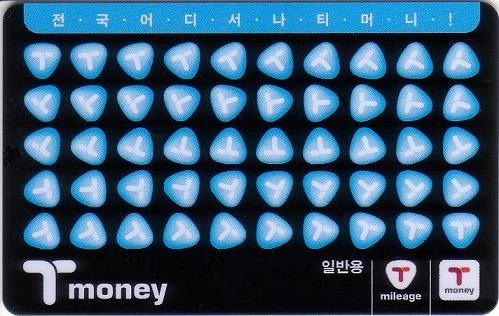
A T-money card (티머니, tee-muh-nee) is the prepaid card that gets you through every subway gate and onto every city bus in Korea. The surest way to get one is still a plastic card for a few thousand won from any convenience store, including the ones on the arrivals level at Incheon Airport, loaded with cash; on an iPhone you can instead add Tmoney to Apple Wallet and top it up in the Mobile Tmoney app with an overseas Mastercard, American Express, UnionPay or JCB card through the app’s Foreigner option, available since March 2026. Visa is not accepted in the app, and Wallet’s own top-up still needs a Korean-issued card.
What changed recently
- June 28, 2025: base fare ₩1,550
- The Seoul subway base fare with a transit card rose from ₩1,400 to ₩1,550. A single-journey ticket costs ₩100 more plus a ₩500 deposit you get back at the machine.
- July 22, 2025: Tmoney in Apple Wallet
- iPhone and Apple Watch can hold a prepaid Tmoney card. Top-ups inside Wallet itself need a Korean-issued credit or debit card.
- March 17, 2026: foreign cards at station machines
- Seoul’s new ticket machines at 273 stations on Lines 1 to 8 take overseas Visa and Mastercard for single-journey tickets and Climate Card short-term passes, with an average 3.7% service fee. Tapping a foreign card at the gate itself is not available.
- March 18, 2026: foreign cards in the Mobile Tmoney iPhone app
- A Foreigner button on the app’s login screen skips Korean sign-up, and overseas Mastercard, American Express and UnionPay cards can top up the Tmoney card that lives in Apple Wallet; JCB was added in July. Visa is still not accepted.
- October 1, 2026: Climate Card trimmed
- Seoul ended the 30-day Climate Card; the short-term visitor passes continue, now Seoul-only. They do not include the bike share or the Hangang Bus.
Which card to get
| Option | Cost | Best for |
|---|---|---|
| Plastic T-money card (티머니 카드, tee-muh-nee kah-deu) | A few thousand won for the card; design editions cost more. Load ₩1,000 to ₩90,000 per top-up in cash. | Everyone. Works on subways, city buses, most taxis and at convenience stores nationwide. |
| Tmoney Travel Card (티머니 트래블 카드, teu-reh-beul kah-deu) | ₩4,000 (₩6,000 for the Plus version with WOWPASS payment) | Visitors who want partner discounts at some attractions and shops. Same transit use as the plain card. |
| Tmoney in Apple Wallet + Mobile Tmoney app | Free to add; top-ups in the app with an overseas Mastercard, Amex, UnionPay or JCB card (not Visa) | iPhone XS or later with one of those cards. Wallet’s own top-up button still wants a Korean card. |
| Mobile Tmoney app on Android | Free; overseas card brands unconfirmed | Android phones sold in Korea. We could not confirm which overseas cards it accepts or whether it works on phones bought abroad; keep a plastic card as the fallback. |
| Climate Card short-term pass (기후동행카드, gee-hoo-dong-heng kah-deu) | ₩3,000 card + ₩5,000 (1 day) to ₩20,000 (7 days) | Seoul-only stays with three or more paid journeys a day. See the pass section. |
| Single-journey ticket | Fare + ₩100, plus ₩500 deposit returned at the machine | One or two rides, or anyone whose foreign Visa is the only card. |
At Incheon Airport
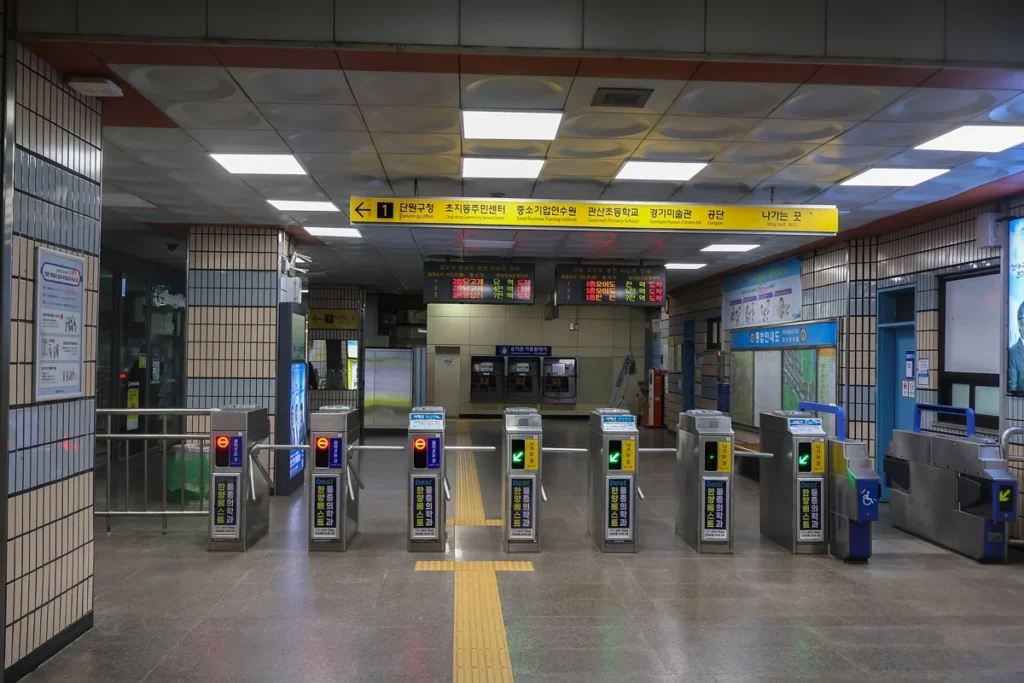
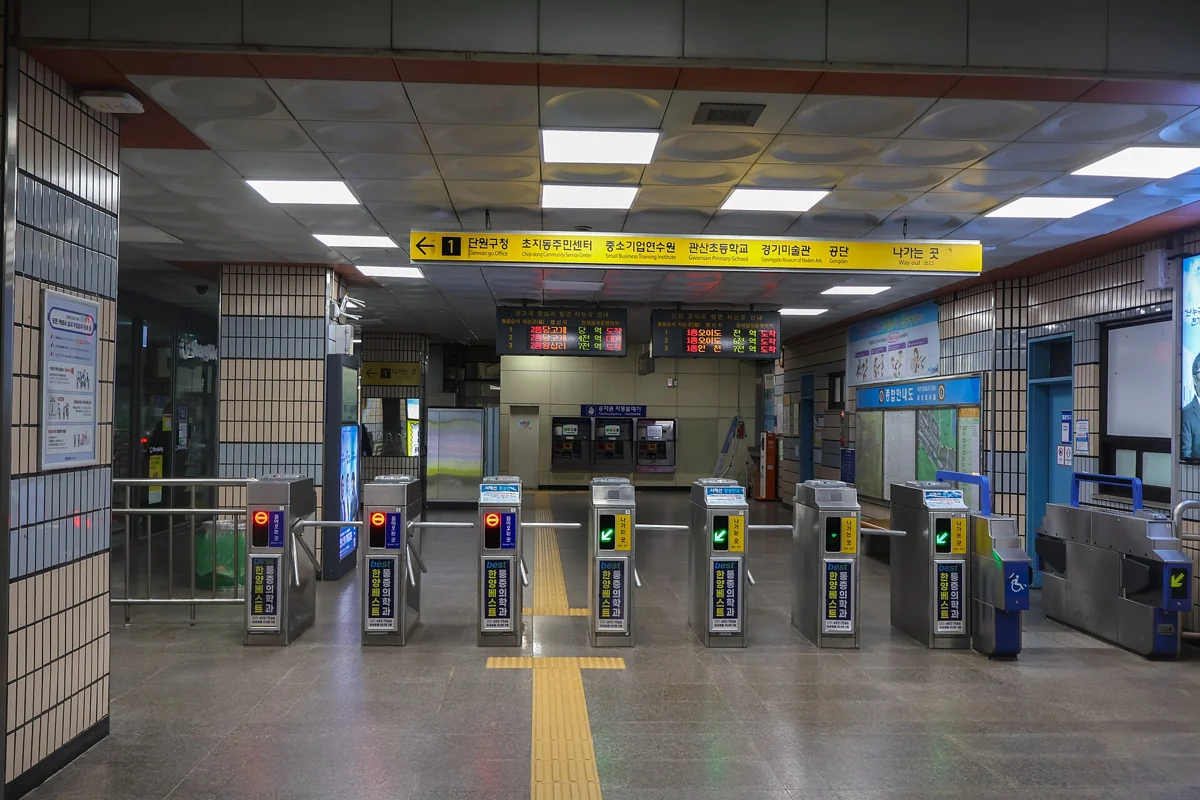
Walk out of customs and the convenience stores on the arrivals level sell T-money cards and top them up; the airport bus ticket office sells the Tmoney Travel Card. Pay for the card and the first load in cash, since the top-up counters take Korean won. Then tap it on the AREX all-stop train into Seoul Station; the AREX Express has its own ticket and does not take T-money for the fare. Our airport arrival guide covers the trains, buses and the K-ETA paperwork, and the first subway ride guide covers the gates and transfers once you are in the city.
If you fly out of Incheon, the same stores take the card back for a refund (below). Leave a little on it if you plan to return: a Tmoney official told Korean press in June 2026 that a balance lapses five years after the last top-up or use, and that even then a physical card can be brought in for a refund.
Topping up, fares and transfers
- Where: convenience stores (GS25, CU, 7-Eleven, Ministop, Emart24, Storyway, 365PLUS), the top-up machines in every subway station, and the station information centre. Tmoney Town at Seoul Station (Exit 10, Seoul City Tower, 1st floor) handles everything including large refunds.
- How much: in ₩1,000 units, ₩1,000 to ₩90,000 per top-up, up to a ₩500,000 balance. Cash only at the counters and machines. ₩20,000 is about twelve base-fare journeys; the airport train costs more.
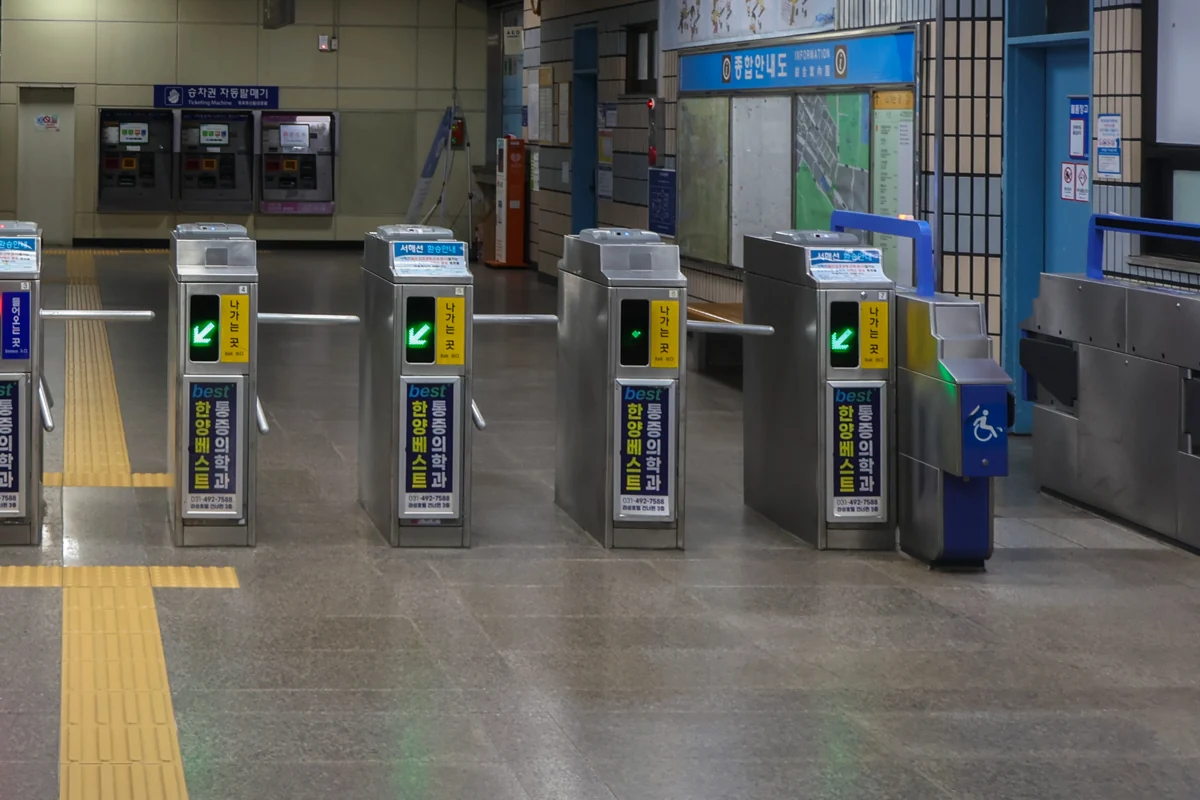
- Fares: ₩1,550 for a base subway journey in Seoul, more for longer distances; city buses are similar. The base fare is taken when you tap in and any distance extra when you tap out, so always tap out.
- Transfers: switching between subway and bus within 30 minutes counts as one journey, with up to four transfers (five rides) per trip, and the window stretches to an hour between 9 pm and 7 am. It does not apply to two buses on the same route, and it only works with a card, not with single tickets.
- Children and teens: ages 6 to 12 and 13 to 18 get lower fares if the card is registered with a date of birth at a convenience store or information centre, with ID shown. An adult caught using a child’s card pays 30 times the base fare.
iPhone, Android and foreign cards
Many visitors want to skip the plastic card. In 2026 whether you can depends on your phone and on which card brand is in your wallet.
iPhone and Apple Watch
Tmoney has been in Apple Wallet since July 22, 2025: open Wallet, tap the plus sign, choose Transit Card and Tmoney. It needs an iPhone XS or later on iOS 17.2 or later, holds prepaid cards only, and works with Express Mode on one card. Apple’s own Korean page says that adding money to a Tmoney card in Wallet, including auto top-up, requires a credit or debit card issued in Korea; the way around it since March 18, 2026 is the Mobile Tmoney app’s Foreigner button, which lets an overseas Mastercard, American Express or UnionPay card (JCB since July) top up the card through Apple Pay without a Korean sign-up. Korea JoongAng Daily reported no Visa support in March 2026, and the app’s July update (2.4.4) added only JCB. At the 2025 launch, before this option existed, a test with US and UK Visa, Mastercard, Amex and Discover cards found all of them declined inside Wallet. We have not run the Foreigner flow ourselves; whether the overseas card must first be added to Apple Pay is not spelled out in the reports.
Mobile Tmoney app on Android
The Android version of the Mobile Tmoney app (Korean and English) also offers top-ups, but we could not confirm which overseas cards it accepts or whether it works on a phone bought abroad; the overseas-card reports above are about the iPhone app. Keep a plastic card as the fallback.
Visa only
Load the plastic card with cash, or use the new station ticket machines: since March 17, 2026 they take overseas Visa and Mastercard for single-journey tickets and Climate Card short-term passes, with an average 3.7% service fee on top. You still cannot tap a foreign bank card at the gate.
When a Climate Card pass beats T-money
Seoul’s Climate Card (기후동행카드, gee-hoo-dong-heng kah-deu) sells short-term unlimited passes for visitors: ₩5,000 for 1 day, ₩8,000 for 2, ₩10,000 for 3, ₩15,000 for 5 and ₩20,000 for 7, on a ₩3,000 plastic card sold at the ticket kiosks in Seoul Metro stations on Lines 1 to 8 and at convenience stores near them, or as a mobile card in the Mobile Tmoney app on Android. The pass starts on the day you load it, from the first train, and runs to the last train of the final day in calendar days, so load it in the morning. Counting the ₩3,000 card, a 3-day pass costs ₩13,000, about nine base-fare journeys (a free transfer counts as one), so it pays off at about three paid journeys a day and sooner on long rides. Since October 1, 2026 it covers Seoul subway lines and Seoul city, village and late-night buses, and you can ride it out to Incheon Airport Terminals 1 and 2 (getting off there only, not boarding). It does not cover Gimpo, Goyang and other stations outside Seoul, the Sinbundang Line, GTX-A, airport or intercity buses, the Ttareungyi bike share or the Hangang Bus, and the AREX Express needs its own ticket. Refunds within the validity period return the charge minus fares already used and a ₩500 fee; visitors who cannot register the card online go through Tmoney Town.
Refunds when you leave
- Small balances: hand the card to any convenience store that sells T-money and ask for a refund (환불, hwahn-bool). You get the balance in cash minus a ₩500 fee. The card itself is not refunded, so keep it as a souvenir or for the next trip.
- Partial refunds and larger balances: only Tmoney Town at Seoul Station and subway station service centres do partial refunds, for amounts between ₩10,000 and ₩50,000 in ₩10,000 steps. For a big balance, go to Tmoney Town rather than a convenience store.
- Mobile cards: mobile Climate Card passes are refunded in the app. We could not confirm how a visitor gets a Wallet Tmoney balance back, and Korean press reported in October 2026 that a balance on a lost iPhone can only be recovered through an iCloud restore, so top up only what you will spend.
- Don’t over-load: top up in ₩10,000 steps near the end of the trip instead of leaving ₩40,000 on the card.
Heading on to Busan by train? KTX tickets are separate from T-money; our KTX booking guide explains the two-month window and the KORAIL PASS PLUS, which bundles a rail pass with a transit card for ₩8,000 more.
Useful Korean phrases
For the convenience store counter. Pronunciations are approximate.
Sources and update date
Updated October 24, 2026. Rules were read from Tmoney’s foreigner guide, Apple’s Korean transit page and Seoul city notices on that date. Next check: when Seoul extends foreign-card payment to fare gates, or Tmoney changes the app’s accepted cards.
View sources and photo credits
- Tmoney, Tmoney Card user guide for foreigners (purchase and top-up points, limits, refunds, transfer discount), read October 24, 2026.
- Tmoney, Travel Card for foreign visitors (Tmoney Travel Card ₩4,000, Plus ₩6,000), read October 24, 2026.
- Apple, Apple Pay 교통카드 (Tmoney in Wallet; Korean-issued card required for top-ups; device requirements), read October 24, 2026 (Korean).
- Mobile Tmoney app, App Store listing, release notes 2.4.1 (March 18, 2026, overseas cards) and 2.4.4 (July 1, 2026, JCB) (Korean).
- Korea JoongAng Daily, Apple Pay Tmoney allows foreigners, tourists to ride using iPhones, March 19, 2026 (Foreigner button, Mastercard/Amex/UnionPay, no Visa, Wallet top-up still Hyundai Card only).
- Seoul Metropolitan Government, Climate Cards and single-journey tickets now accepting international credit cards, March 2026 (440 machines, 273 stations, about 3.7% fee).
- Seoul Metropolitan Government, Climate Card notices: short-term pass coverage from October 1, 2026, bikes and Hangang Bus not included, and pass prices and refunds (Korean).
- Tmoney, Climate Card guide (₩3,000 card, kiosks on Lines 1 to 8, start day rule, airport alighting only, refund formula) (Korean).
- Electronic Times (전자신문), Tmoney balance expiry, June 8, 2026, and Financial News, lost-iPhone Tmoney balances, October 19, 2026 (Korean).
- Seoul Metropolitan Government, integrated transfer discount (up to four transfers, five rides) (Korean).
- The Korea Times, Tmoney transit card access now available for iPhone users, July 22, 2025; Korea JoongAng Daily, Korea rolled out Apple Pay for public transit, but it doesn’t work for tourists, July 2025.
- Seoul subway base fare of ₩1,550 from June 28, 2025: Seoul city announcement as reported by SBS Biz and Segye Ilbo, June 2025 (Korean).












Leave a Reply